legs
A TUI for viewing R data

The Problem
I have always been looking for ways to become a more efficient in my work. Despite creating tons of keybindings for tasks I do commonly, building several packages to make my analyses easier, and reading a whole bunch of R docs pages, the single most impactful change to my efficiency has been learning vim motions.
I started learning vim motions in VSCode, then Positron, and over the past year, I have completely ditched Positron and RStudio for my R development and fully embraced neovim (thanks in part to this great blog post). I am completely in love with neovim and am beginnning to finally feel like I have my neovim config pretty dialed in. But I still have one minor annoyance: the lack of an interactive data viewer.
By default on my machine, when you call View() on a data.frame, you get something like this:
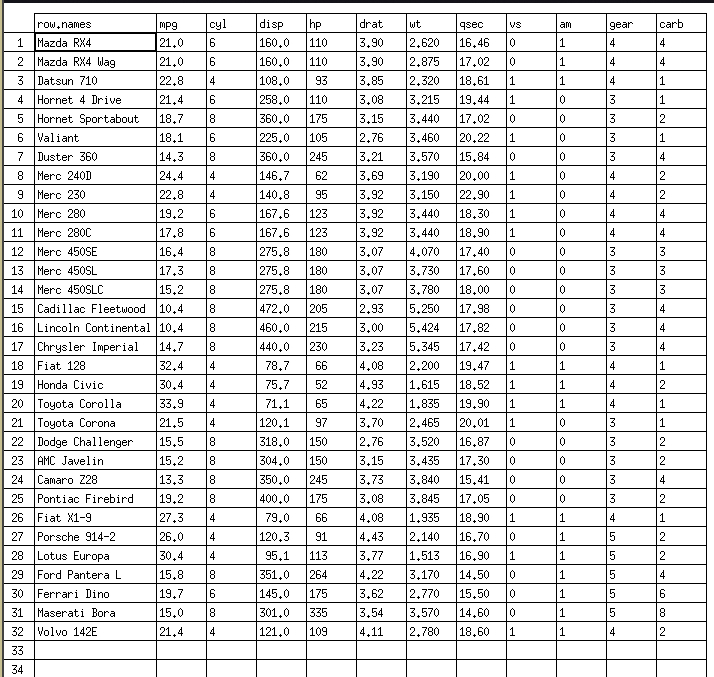
Not exactly a sight for sore eyes.
There are ways to make this a little better. In R.nvim there are ways to make this a lot more bearable like a keybinding to print an object as a comment or a global environment viewer. However, neither of these quite satisfy my desire to interactively step through an object in the same way you can within RStudio.
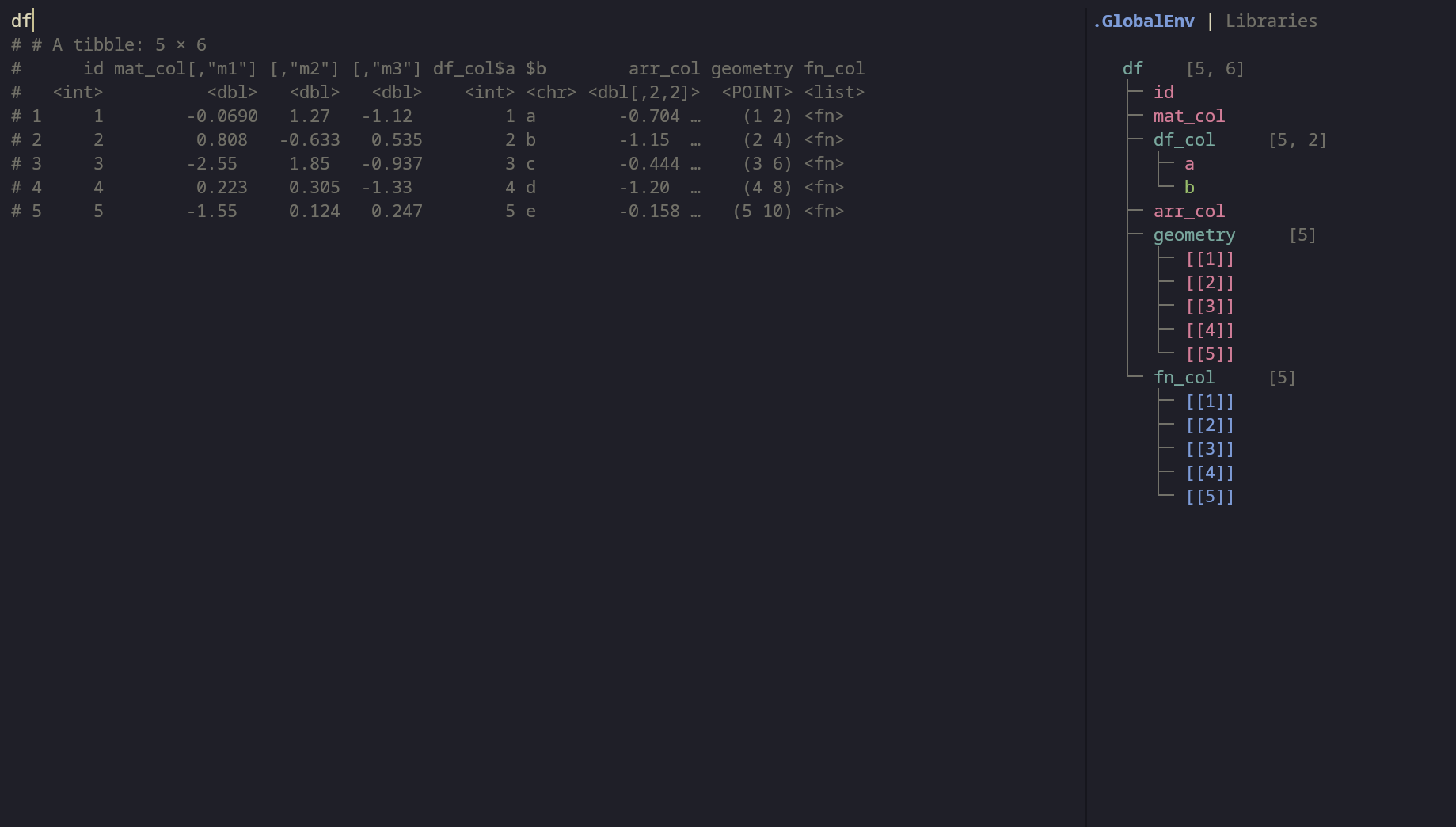
So I created an R package of my own that does just that. legs is a neovim-first TUI data viewer for R which leverages the power of the pillar R package to allow you to interactively explore data.frames, matrixs, arrays, lists, and vectors.
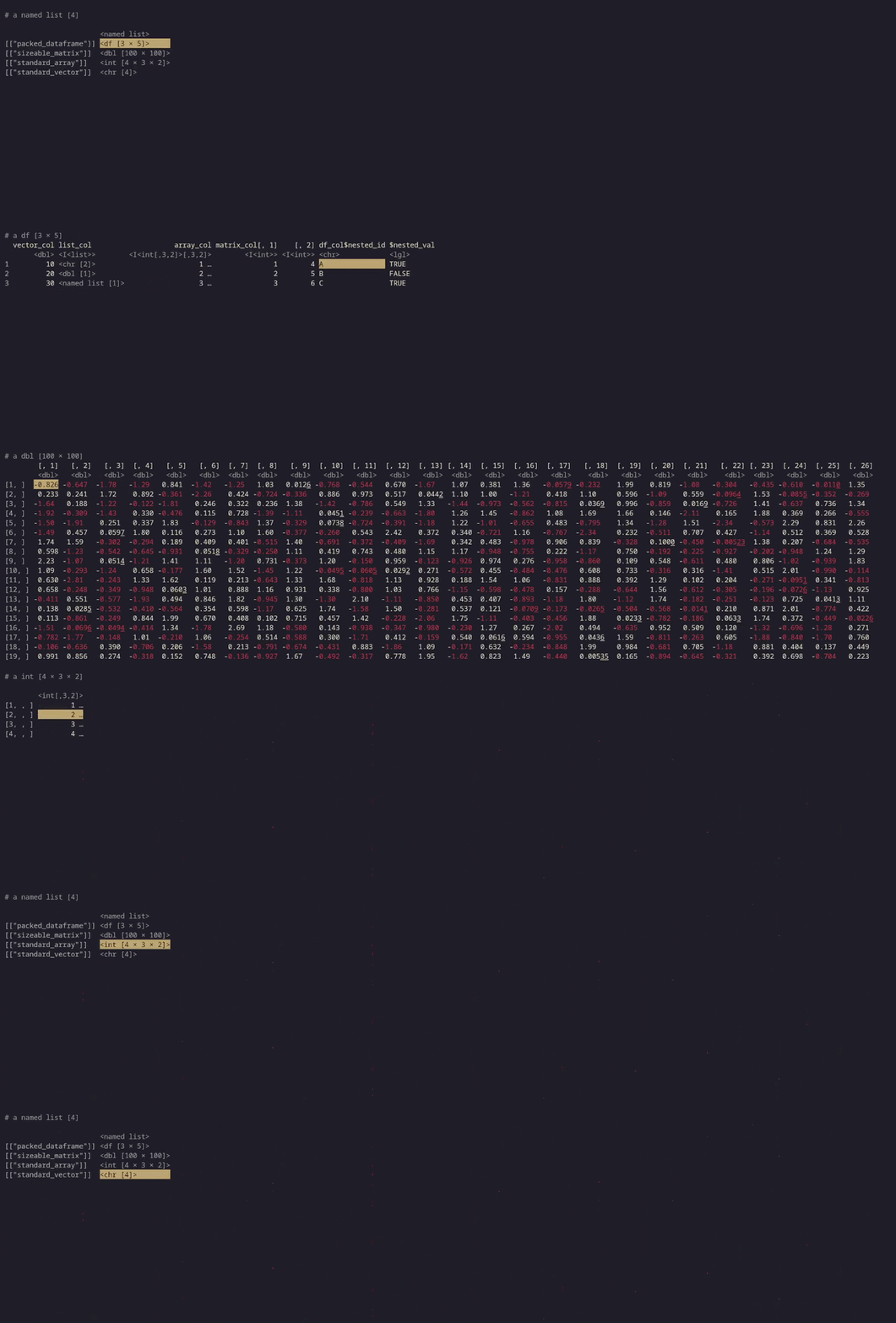
How it works
Built in Rust, legs is performant. To keep memory overhead minimal, legs calculates the exact bounding box of rows and columns visible in your current viewport. It then calls pillar::ctl_new_pillar_list only on that visible subset of R data. This allows legs to honor R data formatting conventions while maintaining the ability to quickly maneuver through a dataset.
As an example, here it is maneuvering through a dataset almost a gigabyte in size.
Code
num_rows <- 1000000
num_cols <- 100

big_matrix <- matrix(rnorm(num_rows * num_cols), nrow = num_rows, ncol = num_cols)
big_df <- as.data.frame(big_matrix)

colnames(big_df) <- paste0("Var_", 1:num_cols)
big_df$ID <- paste0("ID_", 1:num_rows)
big_df$Group <- as.factor(sample(c("Control", "Treatment_A", "Treatment_B"), num_rows, replace = TRUE))

print(lobstr::obj_size(big_df))
# 875.93 MB
legs::view(big_df)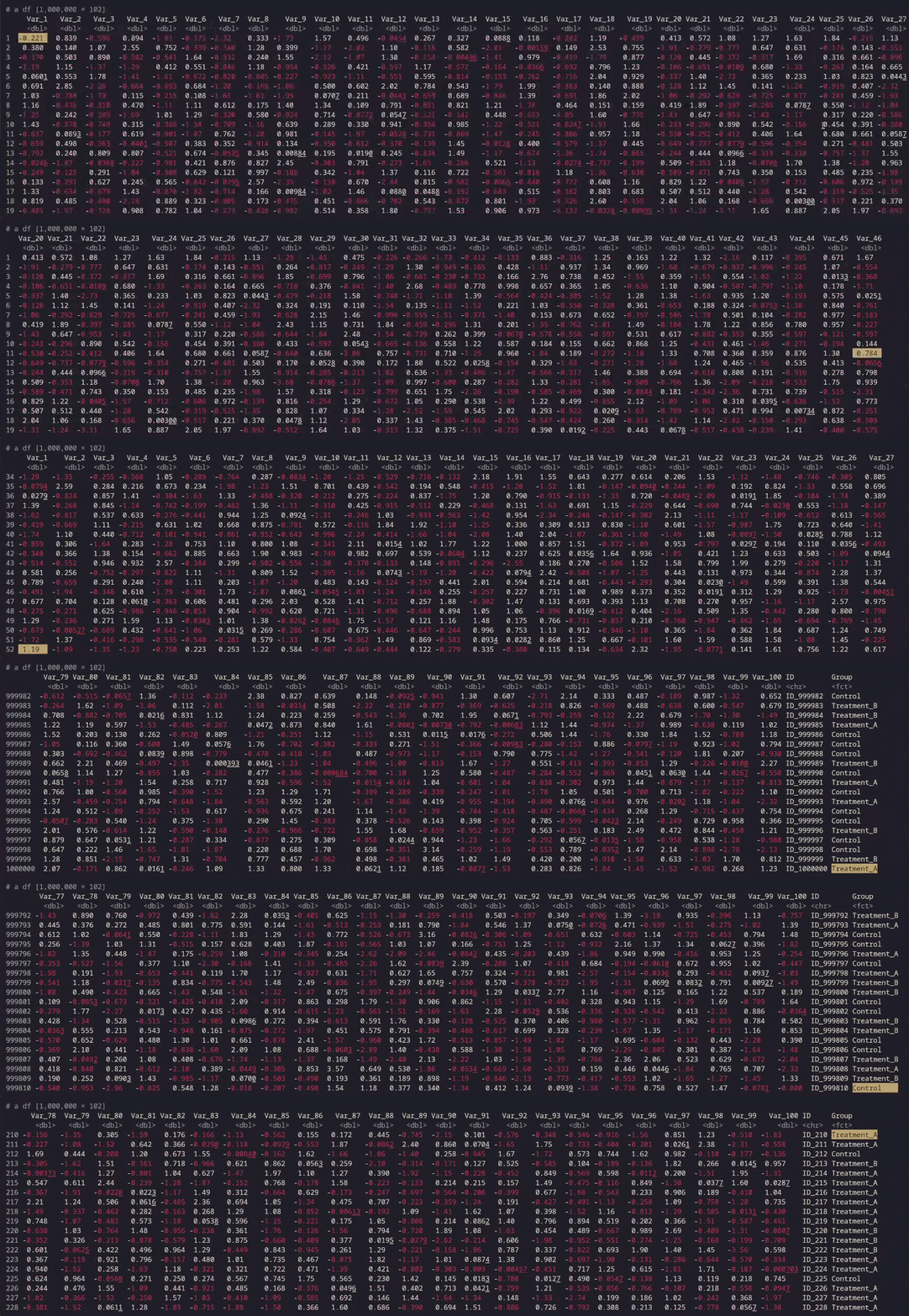
Try it out
You can install the development version of legs from GitHub with:
# install.packages("pak")
pak::pak("ryanzomorrodi/legs")
legs does not work in Positron or RStudio because of limitations within their implemenation of the R console. It does however work inside of a normal R terminal or an arf session.
If you have any additional feature ideas, please feel free to create an issue.